Youth Voting: Propaganda in the Digital Age
- Madison Shanfeld
- Apr 15
- 6 min read

Updated: Apr 21

With the arrival of Generation Beta in the last year, there have been three consecutive generations with full internet and digital exposure. However, the vast amount of GenZ, the first generation with full technological childhoods, have reached an important milestone in the United States; they are 18 years of age with the new ability to vote.
In contrast, the average age of presidential candidates in the last 6 years has been well over 70, and in the 119th Congress, the average campaigning age was approximately 58 for

the House and 65 for the Senate. There is a large generational and cultural gap between new voters and those campaigning for office. The battle for a seat has become less about who can swing the middle aged voters, which have already established voting patterns, but who can snag the new digital generation. To gain support, campaigns have turned to the political language all generations can understand, propaganda. But the question remains, who can transform their campaigns from posters, to posts.
Propaganda Throughout History
Political propaganda has been present in human society since the ancient civilizations.

During Egypt's powerful reign, they would use temple reliefs and monuments to paint the Pharaoh as a supreme leader as well as to sanitize the ideas of war. Ancient Greece followed suit as Alexander the Great utilized coins, statues, and monuments to present his face to all of the empire as the most capable of holding power. Even the Catholic Church in the 1600s established Congregatio de Propaganda Fide, or Congregation for Propagating Faith, to manage the Church’s religious messaging.
However, this was just the origin of propaganda, its more modern form hit key

developments in World War I, when governments began establishing propaganda departments to push the war efforts. By the time World War II was at its peak, propaganda had taken on a negative, manipulative connotation; world leaders were putting racially motivated discrimination on posters around the nation. For example, Hitler pushed the idea of dirty Jews all over Germany and his newly annexed nations while the United States made anti-Japanese advertisements, warning Americans of possibly fraudulent or spy-like behavior.
Now that the digital age has dawned upon the world, simple signage and commercials aren’t strong enough to influence the nation’s opinion on a candidate or policy. Starting in the 90s with Bill Clinton’s use of the internet in his campaign, social media has become the newest pathway to propaganda and power.
How Social Media is Utilized Today
Unlike the early to mid 1900s, 19th century modern political propaganda has shifted away from war efforts and discrimination against ethnic groups to campaign and policy support. This change from traditional methods to social media has created differences in politicians’ propaganda strategies.
One recent shift of the modern politician has been to move some of their traditional campaign commercials from cable TV, which has dropped by over 30 million users, or 30% of its consumer base, in the last 15 years, to Youtube, Peacock, Paramount +, and Hulu. During the 2024 presidential election, 8.3% of Youtube ads were political with $2.5 million dollars per day being spent by campaigns. Experts have expressed a belief that these numbers will only rise with the 2026 mid-term elections.
Furthermore, political Tiktok accounts are increasingly gaining traction as campaigns hire social media managers to chase the newest trend, fad, or audio in order to reach the

eyes of younger Americans. It is also incredibly common for these accounts to directly compare one candidate to another, using trends to make a politician’s opponent look weak, childish, or idiotic. As film edits have grown in popularity, making up a large portion of TikTok's algorithm, political campaigns and parties have started editing their candidates to music with the end goal of making them appear compassionate, strong, and powerful.
Outside of Tiktok, candidates have been attempting to reach middle aged and older audiences through Instagram and Facebook where they spend less time chasing trends and more time posting short-form, traditionally direct, content about their ideas or pictures of campaign milestones. These platforms feature less direct comparison between candidates and performative posts, instead putting emphasis on upcoming events and recent news.
Despite how mundane the individual posts feel to the modern audience, every movement of campaigns and candidates on social media is a piece of propaganda urging the nation to write their name on a ballot come November. However, the most sought after demographic across all platforms, is the small population who have recently registered to vote; the youth.
Importance of Youth Voting
Political polarization in the last decade has increased, resulting in divided governments
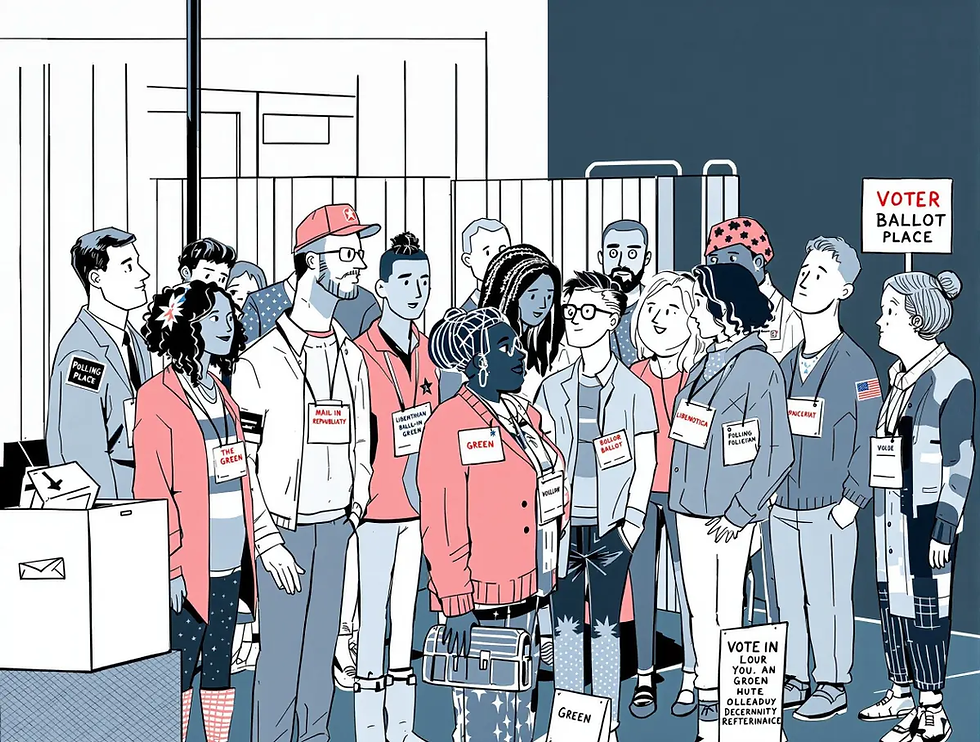
and tight electoral races. When distribution of congressional seats is tight, both parties fight tooth and nail to win each open spot. However, it is common practice in the United States to have party loyalty, or an affinity to continue voting for the same party despite policy or candidate changes. While not every American participates in party loyalty voting, it is popular. This technique poses a challenge during periods of campaigning as the composition of votes for Republicans and Democrats do not change as drastically between cycles. Luckily, this practice is traditionally held with middle age and older voters, who have established their loyalty as time has progressed.
Now, the campaigns fight for the largest population of Americans who have yet to choose a primary party loyalty, youth voters. Securing the larger population of youth voters serves as a campaign-changing feat to balance those who will undeniably vote for the opposing party.
Youth voters are scientifically easier to sway, as adults younger than 25, the biological average for complete prefrontal cortex brain development, have yet to acquire a fully
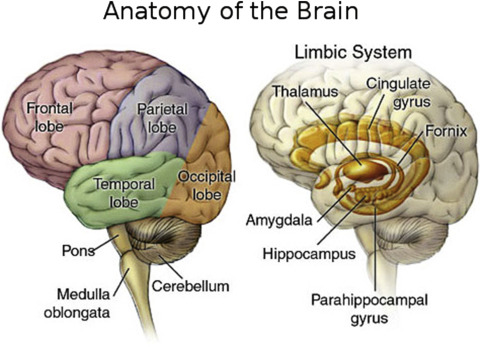
developed frontal lobe, which is the brain’s command center for rational thought and decision making. Typically those without the fully developed prefrontal cortexes utilize their limbic system, the emotional epicenter, more heavily to make decisions. This makes them more susceptible to peer pressure and propaganda. Thus, ages 18 to approximately 25 are a sought after, moldable demographic which can be more easily swayed by a candidate's propaganda strategies. As the population of the United States in this age range is very involved in social media, it supports why campaigns are beginning to lean on internet platforms.
Propaganda into Nationalism
While the United States has moved towards freedom to campaign and an expansion of freedom of speech via social media, there is at least one nation who has taken digital propaganda and transformed it into nationalism; the biggest question mark across the globe, North Korea.
North Korea has isolated itself from the world, and the granules of information other countries receive exhibit a dictatorship, with a ruler who pushes the idea that North Korea is a

cut above all other nations, especially its neighbor, South Korea. In the emergence of technological impacts on politics, Korea has limited the exposure to other nations via the internet to maintain control over public opinion. Furthermore, there has been evidence of phones from North Korea who autocorrect “South Korea” to “Puppet State.” When this is combined with the complete isolationist approach of the nation and the inability for citizens to leave or experience alternate cultures, North Korea expresses a daily narrative that it is the supreme nation and all other countries pale in comparison, especially South Korea which is dirt under Kim Jong Un’s mighty shoe.
Moreover, every home has a photo of their dictator hung over the mantel, a sign that

there is no better ruler than that which they already have. When looking at the dictator’s
strategies as a whole, it is easy to see the similarities in North Korea's approach to propaganda to that of ancient civilizations, with the parading of the ruler’s face across the nation like Alexander the Great and monuments built like the ancient Pharaohs.
North Korea takes propaganda, utilizing strategies new an old, to an extreme. Upon first glance, information like this can seem irrelevant to Americans in the modern setting. However, being aware of other nations approach to politics, propaganda, and social media remains critical to developing internet literacy as well as an awareness of what is propaganda versus what is misinformation or destructive nationalism.


Comments